Category Archives: India

Post 126. ” It’s a boy!”

Standard

When we first arrived in Bombay in 1991, we visited some friends who had a newborn baby.  Zoë held it’s hand and asked me, “Mummy, when we get to our house can I have a pet like this one?”  I had given her a half baked smile and a half hearted nod.

I had been taking caulophyllum again.  I was convinced it had made all the difference with Zoë’s easy birth. We left the girls with the amazing Tiffany (who always seemed to be with us when I went into labour) and drove up to Dr Goldsmith’s Clinic.  I had no pain,  just tightness in my groin.
Image

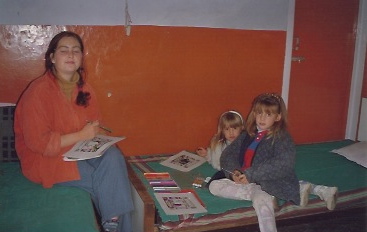
Tiffany with the girls

Tiff brought the girls up at lunchtime and they spent the day with us.  Before long, the room looked like a playground.   There were colouring books, crayons, dolls and puzzles everywhere.  It felt like home.  All through the day people from the outreach were calling from the road below asking if anything had happened yet.  People popped in all day and sat and chatted about how the meetings were going.  The Town Hall was filled to overflowing every night and Rob Rufus was preaching his lungs and heart out.

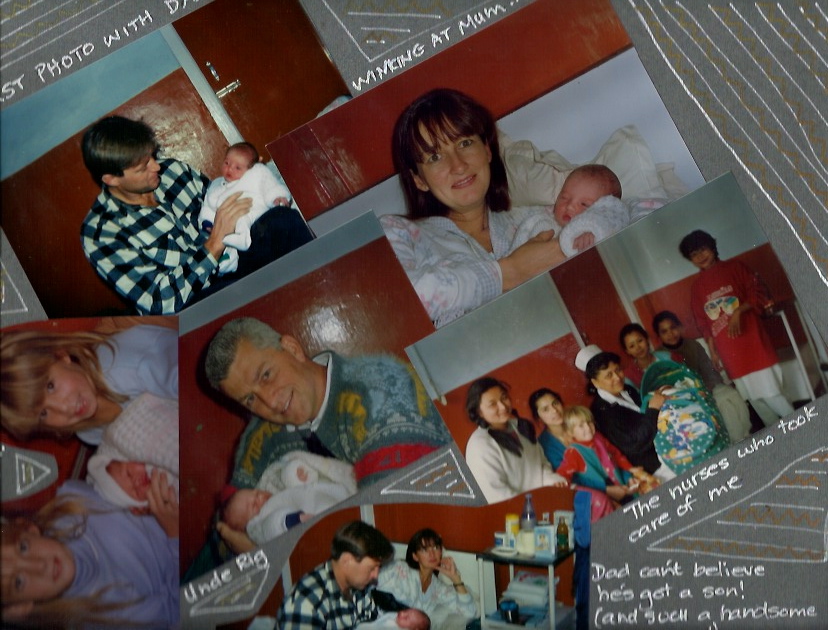
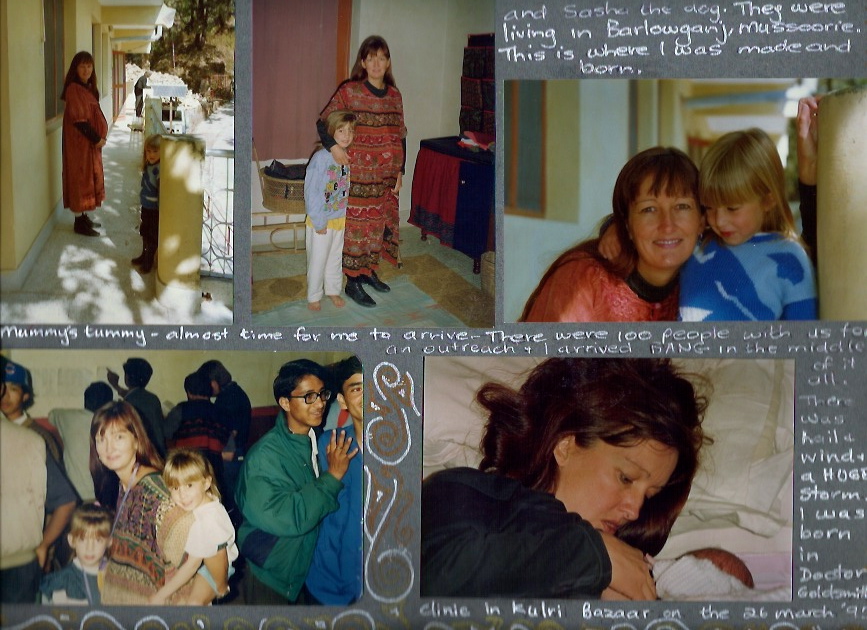
I had no pain all day and I was beginning to wonder if anything was happening.  At about 3pm I had a few mild contractions but nothing I had to use my breathing skills for.  When the midwife examined me at 4 pm she told me I was fully dilated and ready to give birth.  Doctor Goldsmith arrived.   She informed me that because I wasn’t having contractions, I would have to be induced into labour.  One shot in the leg did it. Rigby was outside the door shouting “Push, Lin, push!” and push I did.  Tony was so supportive.  He had learnt from the other two births how to not irritate me in transition.  Twenty minutes later, we were holding our little boy, Jordan.   We cried with joy.  My first words to him were, “Hello, I know you”.  I felt I knew him so well.
Image

I was shaking from the shock of the rapid birth.  The midwives helped me to our room down the corridor.  Tony carried Jordan behind me.  Rigby was sitting on the bed waiting for us with a huge smile on his face, as if he had helped in some way.  He was the first one to hold Jordan.

Tiff brought the girls back after dinner.  They were so excited to hold their baby brother.   Within an hour, the room was filled to overflowing with people.  There were children sitting on the window ledges and climbing on the bed to look at Jordan; people with viral coughs covering their mouths and complete strangers from the shops and street coming in to celebrate the birth of a boy.  Anil Kapoor, owner of the Brentwood Hotel, sent me breakfast, lunch and dinner.  It was so different from the quiet, sterile environment of Johannesburg General Hospital.  It was a real celebration of life.  After about two hours we put a,  “Please do not disturb” notice up on the door in Hindi and English so we could get some rest. Everyone presumed we must have put it there for someone else.

The outreach continued through massive hail and thunderstorms.  Tony stayed with me.  When it was all over and our visitors were boarding the bus to leave for Delhi, I managed to persuade the doctor that I was strong enough to go home.  Jordan was two days old.  We went to see the bus off.   I stood there trying to look brave and strong but I could feel the blood rushing into my feet.  I nearly passed out.  I was so happy to be going home.

Jordan had come two weeks early so Sue had missed it all.  I was bathing him when she walked into our bedroom.  When we saw each other and she saw Jordan we both burst into tears.  Tony’s sister Jan and brother in law, Allan also came to visit.  It was a lovely time with all of us together.  Asha was amazing with Jordan and Zoë was happy to finally have a pet.
Post 125. Overwhelmed by kindness

Standard
Image

From Jordan’s scrapbook. Bottom left: In the town hall, the night before going into labour.

The next big event in our planner was an outreach in the town hall in the last week of March. My due date was the 9 April.  Rob Rufus had agreed to be the main preacher and we were expecting 101 people from Nepal, India, South Africa and other parts of the world, to pitch up.  We booked buses for them from Delhi to Mussoorie.

The plan was that they would go out on prayer walks in areas where church members lived.  We mapped out Mussoorie and were so happy with ourselves for being so organised.  When we showed it to our local friends, they looked at us as and asked us if we were deliberately trying to give our visitors a hard time.  We hadn’t given much thought to how many kilometres or how many hills they were going to have to walk and climb.  We started all over again.

When people found out I was pregnant, they called Sue to ask her what I needed.  She called me to ask me.  There was very little I could get in Mussoorie.  There were no baby grows or onesies, no waterproofs, no light cotton clothes, actually there wasn’t anything.  I mentioned some of those things to her and didn’t think about it again.  Newborn disposable nappies were number one on the list.  I was planning to use towelling nappies after the first couple of weeks so I just needed a few.

We got to the town hall on the first night of meetings and people started handing me bags.  Most of them said, “I’m so sorry I couldn’t fit more in my bag, this is all I could carry.”  I was overwhelmed with baby things; carry cot, clothes, hundreds of nappies, vests, honey dummies and everything I needed for my baby.  It was incredible.  We packed it all into our jeep to take it home and it filled up most of the vehicle.  It was amazing.  We didn’t have any cupboards but managed to pack it all in behind the curtains in our makeshift wardrobe in our room.   I had already worked out I was going to be able to share my nappies with Champa who was six months behind me in her pregnancy.  We were so amazed at the generosity of our friends.  Some didn’t know us at all.

The town hall was packed to capacity for four nights in a row.  It had never seen such chaos.  The worship times were wild and noisy.  People from all backgrounds danced and sang Jesus songs.  Rob preached his heart out and many were prayed for.   We had people in our house all day, for breakfast, lunch and dinner.

Most of our visitors were staying at the Brentwood Hotel, which was at the end of the busy alley where I would be having my baby.  Doctor Goldmith’s Nursing Home was in the bazaar near Picture Palace.  The stairway was narrow enough for one person at a time.  There were surgical gloves hanging on a string outside the window and there were three small rooms.  One surgery/delivery room and two room for inpatients.   Each room had three hard wooden beds with thin, just as hard mattresses and pillows. The blankets were the heavy, rough type. There was an attached bathroom, which needed a good scrub before it could be used.  It wasn’t unusual to see a rat running down the passage.  There was no oxygen or incubator if anything went wrong.  The closest one was forty-five minutes down the mountain in Dehra Dun.  Mrs Goldsmith was a lovely lady from Mizoram, North East of India.  She had delivered hundreds of babies.  I felt comfortable with her. She was the old fashioned type who didn’t need an ultra sound machine to tell her the position of the baby.   There was no fuss.  Pregnancy and birth were treated like the most natural thing on the planet.  I was happy with that.  We had made sure Tony could be with me during the birth even though it wasn’t an Indian practice.

My pregnancy had been great and I had been healthy and strong.  We had a few ultra sounds done down the hill in Dehra Dun and everything was good.  We were quite eager to know if it was a boy but were aware that it was illegal for a radiologist to inform patients about the sex of the baby.  There was so much female foeticide.  In the 6th month we had seen “something’ that made us think it was a boy.  The doctor wouldn’t tell us but he had smiled and told us that there was a 90 % chance that it was what we were wanting.  We still weren’t totally sure.  Whatever it was, we were going to be thrilled.  I felt so close to our baby and so excited to finally meet.

Sue was booked to arrive a day before my due date.  We were hoping she would be able to be in the delivery room with us.   I had been feeling tightness in my inner thighs for a week and lots of Braxton Hicks.  At 4 a.m. on the 26 March, right in the middle of the outreach, my waters broke.  Two weeks ahead of time.

Post 124. The Snake Tribe

Standard

We had outgrown the small chapel and our friend Anil Kapoor, owner of the Tavern Restaurant gave us the use of his restaurant on Sunday afternoons.  It was as wild as ever.  There was lots of dancing.  Community of Nations Church wasn’t good at holding back on their joy.  When we got too rowdy, he let us have a smaller hall above the restaurant which filled up within a few weeks.  There were people sitting along the windowsills and on anything that looked like bum space.

The gypsies from near Landour Community Hospital started coming back.  We hadn’t seen them since Raju died.  There were also a few families from a snake tribe.  They trained monkeys to do tricks and hunted porcupine in the jungle.  Their dogs were thin and covered in quill marks.

Image

Sarda at the church camp fire.

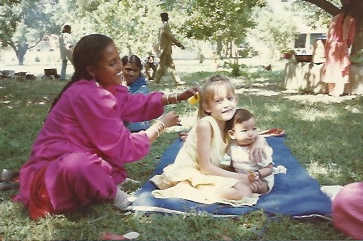
Jesus had healed their youngest daughter, Sarda, during one of our outreaches.  She kept coming back and her family followed close behind.  Her parents, Dayaram and Pooja were so grateful.  They had a corn business.  They sat at the side of the road with small steel woks filled with hot coals.  They cooked corn-cobs over the coals and covered them with chilly and lemon before selling them to passers by.  When the corn season was over, they walked from place to place, selling bangles and bindis.

They lived in a plastic tent above King Craig with their two sons and two daughters.  Their place was so lovely.  The outside was made of black plastic and they had lined the inside with a tribal fabric.  There were a few trunks with mattresses to sit on and a pile of mattresses, which they put on the floor to sleep on at night.  Near the door they had made a clay oven and there was a basket for their few steel utensils.  When the weather was good, one of our favourite things was to lie on a mattress on our tummies and look down onto the Doon Valley.

Once when I was sick, the ladies came into my room with marigolds from their little garden.  Every now and again we would find a packet of sugar or flour at our door.  They even brought a freshly caught porcupine for us.  We had no idea what to do with it, so they went into the kitchen, turned on the gas and cooked it right then and there.  No pots or pans needed.  They gave the quills to the girls.

Image

Bina with Asha

One of our most memorable church camps was with these new families.  About thirty of us went down to Laxiwala and set up our tents near the river.  There was nothing there, just lots of trees and space to set up camp.  We all had duties and there was lots of hard work involved.  When it was all done, we took our soap, shampoo and towels down to the river to have a baptism, wash, swim and brush our teeth.  Tony was wading in the river with Dayaram’s brother, Om Prakash.  Om Prakash looked into the water and at lightening speed, caught a snake that was swimming by.  Tony thought it was pure luck until it happened a second time.

Image

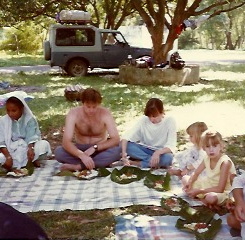
Camp lunch with our jeep in the background

At night we sat around the fire and sang our hearts out to Jesus.  Some songs were translated into Hindi and stories were shared.  There was lots of laughter and giggling that came from the tents late into the night.

Image

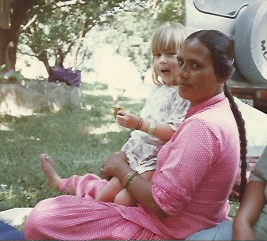
Zoe with Pooja

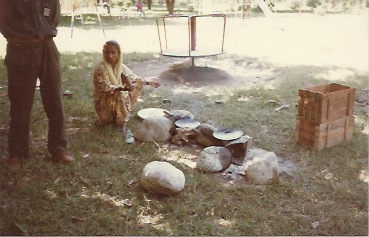
They were so good at jungle living.  We weren’t.  We had run out of paper plates so someone climbed a tree and got huge leaves for us to eat off.  They made an amazing fire in minutes and before we knew it, we were sitting around enjoying our dal, rice and sabzi.  They had strengths we didn’t have. They lived so simply and efficiently.  They knew how to use the resources they had.  Nothing was wasted.  Nothing was extra.  Everything they owned was necessary for their survival.  We learnt so much from them.

Image

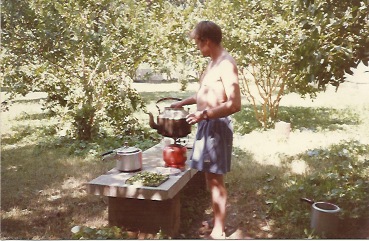
Tony making chai

On the last day, we decided we needed to celebrate.  We needed meat.  Tony got in the jeep with Om Prakash and his wife Bina and drove to the closest village to find some chickens.  The only ones available were live ones.  They put ten of them in the back of the jeep with Om Prakash.  While they were driving along, Tony looked in the rear view mirror and saw feathers flying.  The chickens were going crazy as Om Prakash was getting them ready for dinner.

Post 123. “Let’s just get home.”

Standard

It was an amazing few weeks.  We were tanned and had our fill of fresh fish and yummy pancakes.  We had been on long drives and discovered some beautiful little isolated beaches. OM beach was one of our favourites.  The only people there were old hippies from the sixties who were half naked, still stoned and had given up their passports decades ago.

I wasn’t looking forward to the long drive back to Mussoorie.  I was well into my seventh month and quite a bit bigger than when we arrived.   We packed up our camp and put everything into the jeep.  After a few hours I could feel my feet swelling and I needed lots of toilet stops.  Tony was the “see that tree?” type.  We all saw the tree but that tree was somehow not good enough.  By the time we stopped we were frantic.  He was good this time.  When I got really uncomfortable he stopped and I got out of the car and walked along the side of the road.  He drove slowly behind me.  I got lots of strange looks from people in cars, but I didn’t care.  I could imagine people saying, “Shame, that poor pregnant woman must have had a fight with her husband and is determined to walk all the way home.”  We had to stop more often,  which meant staying in more hotels and spending more money than we expected to.

We were still a long way away from home when we ran out of money.  On our last night, we got permission from the security guard in a hotel parking area to sleep there for the night.  It wasn’t the safest place in the world but we had no option.  We pushed the front seats forward and extended the bed onto the dashboard.  Tony made up the bed and when it was ready we crawled in to find our place.  I booked mine near the window.  Tony locked all the doors including the back one.  I opened my little window, excited about getting some fresh air.  Within minutes we realised that air wasn’t going to be an option.  There were SO many mosquitos.  The girls and Tony were ok with no air, but as I lay there, I started to get more and more panicky.  Tony kept encouraging me to try to get some sleep.  It was going to be a long time before sunrise.  I lay there with my eyes brimming with tears, trying to control my hormonal claustrophobia.  Tony heard me sniffing and asked if I was ok.  That was it.

“Babe, I need to get out of here. Like now.  Tone?  Please let me out.  Can you please open the door?  I really need some air.  Tone!”  He was doing his best to put his hand below the wooden bench to get to the door handle.  I couldn’t wait.  I opened my small sliding window and tried to get out with Tony telling me my stomach was going to get stuck.  I didn’t care.  I needed air.  My legs were out when he finally opened the back door.  I was close to hysterical.

We folded the bed back and the girls fell asleep quickly.  Tony and I tried to get some sleep in the front seats.  It was impossible.  By that time we were wide-awake.  Tony was buzzing and I was full of adrenalin.  We looked at each other and said, “Let’s just get home.”  We thanked the chokidar who seemed happy to have seen some action in his quiet parking lot.

It had been a long, full day of driving and we still had the whole night ahead of us.  We had money for food and diesel and that was it.  Night driving in India was full on.  Every truck had “Please use dipper at night” and not one truck driver knew what that meant.  There were thousands of trucks, bright headlights, no streetlights, bullock carts with no reflectors, bicycles, and animals and people running across the road.

I kept slapping Tony’s head and he kept slapping his face.  We tried everything to stay awake.  When we drifted off the road, we realised it was time to stop.  We pulled to the side of the busy road and closed our eyes.  Within half an hour a policeman was hitting our window with his stick, telling us to move along.  There were no coffee shops to get a caffeine shot so we kept moving along.

By the time we got home Tony was speaking another language.  The drive up the mountain was slow and scary.  We got a few minutes here and there to close our eyes but exhaustion had overcome us.  He was actually delirious.  I couldn’t understand a word he was saying.  We left everything in the jeep and climbed into bed.  Tony, still mumbling, said, “Babe, we have just driven a thousand kilometres.”  I rubbed my tight tummy and swollen feet and said, “Yeah, I can feel it.”

Post 122. Little blue tent

Standard
Image

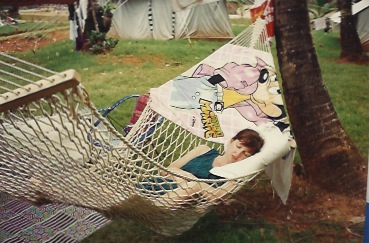
My favourite place to sleep

I had just turned thirty-four.  It was 1994.  Ash was about to turn eight and Zoë was going to be six.  I was happy they were going to be old enough to help with the baby.  Three mothers are better than one.  We were all so excited.

Life continued at a rapid pace and before we knew it, it was time for our three week Goa holiday.  It was too expensive for us all to fly, so we started planning our long road trip.  Tony took the jeep to the carpenter in the bazaar and showed him our ingenious design.  We wanted to turn it into a bed so we could stay anywhere along the coast and not have to spend money on accommodation.  The ply-wood bed was put on stilts so there was plenty of room for our luggage underneath.  The bed was at the height of the driver and passenger seats.  There was a section on a hinge, which could flap over and rest on the dashboard.  At night the whole jeep would become one big bed; big enough for one man, two small girls and an almost seven month pregnant lady.  Or so we thought.

We packed the car and the girls were happy on their big bed.  There wasn’t much height for them to sit up, so they spent most of the time lying on their backs or tummies.   It wasn’t long before their elbows started getting red and raw but they were happy with their books, toys and plenty of water and snacks.

It all went well until our third day on the road.  We were crossing a narrow bridge.  A jeep came from the opposite direction and onto our side.  Tony swerved and slammed on brakes to avoid him.  The girls were lying on their tummies with their faces right near our heads.  They flew towards the dashboard and I screamed out the name of Jesus so loud it freaked Tony out.  I put my arm out to stop them in their flight and Tony somehow managed to get the car under control.  When we pulled over we were all crying.  We looked for blood but there wasn’t any.  Disappointing after such an ordeal but we were grateful to be alive.

Image

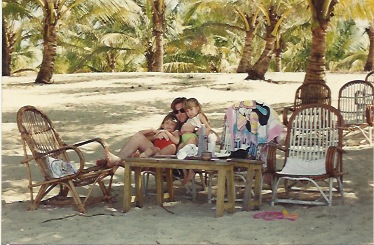
Our favourite place to be

We went to Palolem, our favourite beach.  Tony talked Gaitonde, a resort manager, into allowing us to set up our tent on his property.  He said he would charge Rs 50 a day. We agreed.  We found a spot under a lamppost.  There were two coconut palms for our hammock and a tap right nearby.  The showers and toilets were a few metres away and there was a children’s park in the middle of the resort.  The beach wasn’t even 500 metres away.  It was so perfect.

We spent the whole day setting up, getting rations and hanging up big bed sheets for some privacy.  Tony got some fresh fish and fried it on our little gas burner.  We were all so happy.  The girls were excited about sleeping in our tent.

Image

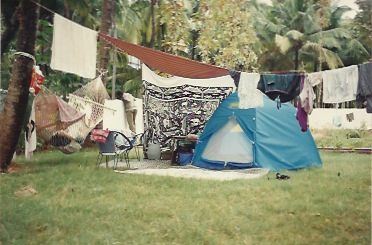
Our little blue tent

It was a five-man tent and there was just enough room for all of us including my tummy. Tony felt the need to be our security person.  He did a good job of locking us in so that nothing could enter or escape.  Including air.  It was tight and the ground was bumpy but we all somehow managed to find a comfortable position.  We lay there talking and laughing about storms and wind and what would happen if the weather changed.

We talked until we were exhausted.  It was hard for me to breathe in such a tight air-less space but I did my best to concentrate on other things.  Just as we were about to drift into much needed sleep, Tony decided to fill up the tent with his pent up gas.  We all started flapping which made things worse.  We couldn’t breathe and we couldn’t get out of the tent.  Our eyes were burning and we didn’t know whether to laugh or cry.  We hit Tony with our pillows and told him he would be sleeping on the beach if he even thought about doing that again.

As soon as the sun came up, I crawled out of the tent on my hands and knees. I took a deep breath of fresh Goan air.   It was so different from the air in our small blue tent.

Post 121. EEEEEEEeeeeee!

Standard
Image

Zoe- photo by Terry Kreuger

The girls and I were in the bazaar so I popped into the pharmacy to get something for my nausea.  I had been feeling sick for a while.  We seemed to live with those feelings so it wasn’t really a big deal but Tony was away in Australia and New Zealand and I didn’t want whatever it was to get worse.  I was also feeling really tired.  We had visitors every month and life was full on and I needed to be well.

Our Tibetan friend Sonam and Vijay Masih were in Australia with Tony.  He wanted them to meet our friends from NCMI and see that we were part of something bigger.  We were so grateful for the many friends we had made in South Africa.  Many of them had visited us and helped us to get the community up and running.  It was an exciting, fast growing movement.  After we left South Africa there had been an explosion of community planting all over the world.

A couple of years before that, we were stuck.  There were international sanctions against South Africa and we were an “unwanted” people.  The world wanted us to change our racial policy; a fair request.  Things started to change when Nelson Mandela become the first black president of South Africa.  The world loved us again and we became the “Rainbow Nation.”

In the late eighties our prophetic, eccentric friend, Malcolm Du Plessis, prophesied, that in a few years we would be bumping into each other in international airports.  Many of us took it with a pinch of salt, having no idea how that could possibly happen.  From May 1994, our prison doors opened and we were free. Then we were everywhere.

Many left South Africa for safety reasons.  They wanted their children to have a quality of life.  Many left because they were racists and couldn’t stand the idea of being ruled by a black political party.  Unfortunately they took their racism with them and struggled with people of colour wherever they went.  Many were fearful.  There were prophecies that there would be a blood bath.  It was a miracle there wasn’t.  White South Africans had been dominating the majority for generations.  They had no idea how the majority would treat them now that the tide had turned.

There was also a prophetic word that the nations would call South Africa.  She would be a lighthouse to the nations who were still struggling with racism.  South Africans had been there and done that.  They had fought the apartheid system and won.  It was a miracle and no one could deny it.  Tony was in Australia for one of the first NCMI conferences with excited, wide-eyed South Africans carrying brand new suitcases.

The girls and I got home and I unpacked my packet from the pharmacy.  I asked the girls to come with me to see what I had bought.

It took me ages to get hold of Tony in New Zealand where he was visiting his family.  International calls were always a challenge.  When he finally got on the phone, I didn’t ask him how he was.  The girls were shrieking and jumping around.  Through all the crackling and chaos, I shouted, “I’m pregnant!”

Post 120. Open house

Standard

Dudley Daniel couldn’t believe what he was seeing.  He sat in the corner of our lounge and watched.  Later on when it was all over, he said, “I don’t know how you live like this.”  It was just another Sunday.  Our house was jammed, wall-to-wall with bodies.  They were in every room, making chai in the kitchen, chatting on the veranda and on the roof.

When Chris and Meryl came, they brought notes on, “How to open your home.”  After a few days with us, Chris changed that to, “The importance of closing your home.”

Hospitality was one of the most important things for us in those early days.  For those who had no family it meant they belonged.  They had a house to relax in and a place to learn.   They knew they could pop in any time and there would be food and chai and conversation.

At one stage we felt we needed at least one day off, so we asked people not to visit on a Monday.  The response was interesting.  It was as if they couldn’t believe we wouldn’t want to spend our day off with them.  We were best friends.  We were family.  Why would you not want to spend your day off with your family?  We felt so awful but they were fine when we assured them that we still loved them and there were six other days to be together.

An open home meant an open life.  People could see how Tony and I were with each other.  They could see the fun we had and they could see when there was tension between us.  It was up to them to decide what things they would do and not do in their own marriage and parenting.  They watched how we raised our children and how we disciplined them.  It was helpful for our kids to know there were others watching when we weren’t around.  The couples that had children started to look just like us.  When their kids were naughty, they would make them look them in the eye, make sure they understood, put them over their knee, give them a couple of spanks on the buttocks with the bum woody, hold them, kiss them, make the child say thank you and off they would go.  When a baby was born, I got all the ladies together and demonstrated how to bath it and change it.

None of the village mums used nappies or waterproofs.  It was a revelation to me that those things were a Western luxury.  The babies were wrapped in any cloth available and they wee’d and poo’d all over everything.   We deliberately didn’t get carpets for our house.  It was easy to wipe the marble floors and it didn’t matter how much mess was made.  I taught the mums how to make cloth nappies and how to make waterproof pants with plastic bags.  The soft, thin bags worked best.  Small ones were perfect for new-borns.  I cut the handles in half and snipped the corners of the bag according to the size of the baby’s legs.  Once the bag was pulled on, the handles were tied around the baby’s waist.  All the mums started using them and it made their lives so much easier.  It was a good way to recycle plastic too.

Most of the discipleship took place over plates of food in our home and other’s homes.  There was a vulnerability about it; sitting on the floor, eating with our hands, hearing stories of parentless, fatherless sons and daughters.  Having people listen to our stories and struggles brought healing to them and us. Our house was their house.  Their house was our house.  Home sweet home.

Post 118. Lunch on the mountain road

Standard

Some called it the road from hell.  There was definitely something demonic about it, especially for those who suffered with chronic car sickness.   For those who didn’t, it was an amazing mountain drive.

Some got sick on the way up, others on the way down.  Some, both up and down.

There were those who insisted on keeping their windows down for fresh air.  That also helped when the driver refused to stop for any reason.  It didn’t help when you were driving past a dead carcass.

Others swore blind that keeping their heads dead straight and their eyes on the road helped.  They lost it when the road disappeared around a hairpin bend.  There were over a hundred hairpin bends.

The theories were amazing.  Some kept chewing gum, some sucked on nimbus (sweet limes) others thought mints helped.  Those who didn’t believe in sucking anything became compulsive swallowers.

People on tour buses seemed to believe that the more they ate before going either way, up or down, the less sick they would feel.  They only believed that once.  It was an experience they never wanted to repeat.

For us, we tried to eat as little as possible. On our way down we usually left in the early hours of the morning so there wasn’t time for breakfast.  I seemed to need a banana quite soon after getting through the foothills.  If I was sitting in the front looking straight ahead, it seemed to help a bit but with two small children in the back seat it wasn’t possible to not look around.

On the way home from Delhi we would stop half way and have lunch at Cheetal Grand.  It was a small dhaba where we had delicious pakodas and sweet, milky instant coffee.  By the time we got to the Shivalik range, the food had settled nicely.  We tried everything.  Fortunately there wasn’t much actual throwing up but there was lots of queeze and swallowing.

Our almost joint-family-car-sick-experience was when we were driving up the mountain after a long trip.  We were tired and Tony was overtaking anything in front of him.  That happened whether we were tired or not, but that is beside the point.  There was a lot of swerving and speed involved.  The more I complained the faster he went.  We had all had enough.

A local tour bus was really irritating us.  It was going quite fast and wouldn’t let us pass.  The name of the tour company was “Panicker’s Travels.”  We kept getting stuck behind it on the bends and I was making up stories about how it might have got its name.  As we got to a straight bit, Tony put his foot down and started to overtake it.  As he did, a woman put her head out of the bus window and threw up all over our windscreen.  We all started screaming things like, “Oh Lord! How disgusting! Aaaah!” and other exclamations I have chosen to forget.  Tony was the only one who didn’t have his hands over his face.  We were all gagging.

Tony couldn’t see properly, but managed to overtake the bus.  With all the noise and commotion, he did what anyone in their panicking mind would do to get rid of the mess.  He turned the wipers on.  He found out a second later that the water pump to clean the windscreen was empty.  We drove all the way home with someone else’s lunch smudged all over our windscreen.

Someone started giggling; a gagging kind of giggle.  Then someone joined in and then we all started laughing hysterically.  By the time we got home, all the tension of the trip had gone but for some reason we all felt the need to have a soapy bucket bath.

Post 117. Boys and ladybugs

Standard

The girls were squealing so loud we had to ask them to tone it down.  We were on the road to our house and they knew it was just around the corner.  They couldn’t wait to see everyone again.  They had missed Sarita and Angie and their puppy Sasha.  As we turned around the tight bend above our house they couldn’t contain themselves.  They were bouncing up and down and screaming.  We were all so happy to be home.  It had been a long, amazing trip in South Africa but we were ready to get back to our house.

We had given out a lot.  There was a lot of talking and answering the same questions over and over, which was exhausting.  At the same time, we were glad people were interested in our lives in India.  I found myself getting peopled out quite quickly and a bit overwhelmed with the intensity of all the meetings.  I also struggled with the whiteness of it all.  We were used to being the minority.  I missed the faces of our Mussoorie friends.  Our lives there were simple.   There were times when I felt quite brain dead for lack of stimulating English conversation but when we were in it, it was all too much for me.  We arrived home needing a holiday.  We caught up with people and had a month to settled back in.

While we were in South Africa there were lots of people who said they wanted to visit us.   Some came for a week, others for a few months and others for a few years.  Dudley and Margi Reed came for a couple of weeks and were such an encouragement to us.  Graham and Kay Jones arrived with their little boys, Seth and Caleb and moved into the flat downstairs.  They were going to stay for a long time and we were so happy to have their company.  The boys were almost the same age as Asha and Zoe and they got on really well.  Except for one thing.

The girls loved ladybugs.  They were their friends and pets.  They collected them and talked to them.  If they had been able to find clothes for them they would have dressed them.  One day they came from the roof screaming hysterically.  When they calmed down enough to talk they told me, “Seth and Caleb are frying ladybugs!  They won’t stop!”  They were so distressed.  I went up to the roof to see what was going on.  The boys had poked splinters through the ladybugs and made their own little fire to fry them on.  They had no idea what all the fuss was about.

The boys also taught the girls how to enjoy scrambling around the hillside.  Before they arrived Asha and Zoe only played on the roof and the rock.  Seth and Caleb got them clambering through the bush, down to the bottom road and all over the cud.  They became quite adventurous.  There were lots of sleepovers and dress-ups and we were in and out of each other’s houses all the time.

Louise Bulley, Dudley Daniel, Lee and Anne Cowles, Dalton and Tracey Gibbs, Don and Andrew Cook, Rob and Glenda, Terry and Linda Fouche, The McKellars, Chris and Meryl, Gill Coetzee, a team from Waverley and Tony’s sister Jan and her husband Allan were among the many visitors we had.

Each had their own India stories to tell but they all had one story in common; the road trip from Dehra Dun to Mussoorie.  It was something they would never forget.

Post 115. Treasure

Standard

It was good to be with Wilf and Val again.  Nothing had changed in Rolleston Place except that a few houses had been re-painted.  No one had died and there were still lots of children everywhere; there were also lots of grandchildren.

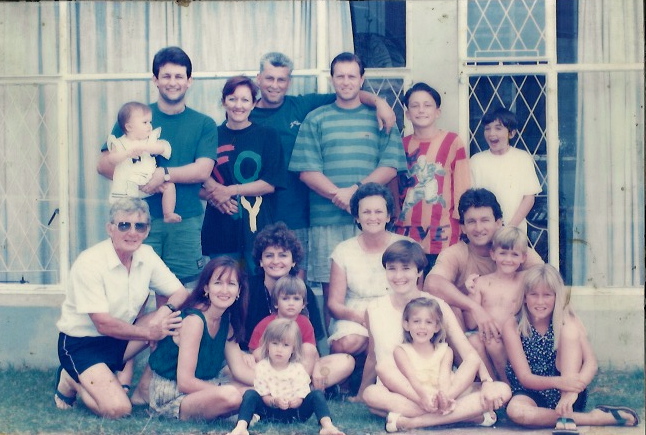
The Lowe family

The Lowe family

The girls were made to sing and perform for everyone just like we used to*.  There were muffled giggles at their accents and their Indian head wobbles.  Dave and Bev brought their three boys Jonathan, Cameron and Mitchell around and there was lots of dancing and jiving in the lounge.  Peter and Char had little Kendal and Rig and Sue came with Ryan and Leigh.  No. 28 * was brimming with life again.  We spent lots of time in the pool and soaked up all the sun we could get.  We had come from another cold winter in Mussoorie.

Image

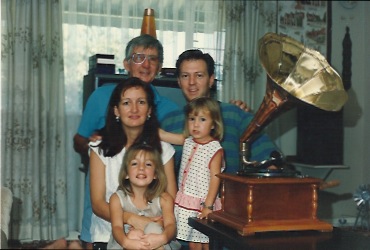
Wilf was so surprised with his gramophone.  He got really tearful and even more emotional when it actually worked. It was amazing to hear an old vinyl playing with all its funky crackles and scratchy sounds.

Val took me shopping.  What a traumatic experience.  She needed to do a big shop so I took half of her list.  I had no idea where anything was.  I hadn’t been in a supermarket with a trolley for two and a half years.  It was BIG.  It took me ages to get the goods and I made my way back to Val.  Everything I had was the wrong brand.  In Mussoorie we had no name brand sugar, flour and milk.  They all came in clear plastic bags.  As Val started to take things out and put them back, I started crying again.  I told her I would meet her outside.  I didn’t want to go near another supermarket.  Not ever.

I had changed.  Everything in me had been shaken up.  My worldview was different.  I shuddered when my family still called their house helpers “girls” no matter how old they were.  They still called their gardeners “boys” or “John” even though they had names.  There was so much I didn’t like and I had to constantly remind myself to not be critical.

Being with my family again made me think.  How often we lock people up in the boxes of our past.  We presume they are the same as they were a year ago or even a few months ago.  There is an expectation for them to behave a certain way and when they don’t we are taken by surprise.  That holiday together helped me to let people out of those boxes I had put them in.  He is like that, she is like that or even I am like that.

We change.  We are flexible and adjustable.  We can go from one culture to another and adjust to it.  It may be difficult but it’s not impossible.  I may not like it or agree with it, but I can be happy in it.  If I look for the good and not the bad, I will find it.  If I have to use a microscope I can do that too.  There is so much good in people; SO many kind, lovely people in the world.

A poor man looks through the rubbish to find treasure.  How often I have found myself standing in a pile of treasure, looking for rubbish.

* Post 5.  Honky Tonk

* Post 7.  Smoking banana leaves